"The Biggest Career Myth of Your Life": Lawrence Chan on What Really Gets a Lawyer Hired
There is a slide Mr Lawrence Chan likes to put up in front of a room full of aspiring lawyers. It lists
the path everyone thinks they know: study hard, earn your honours degree, pass the Certificate in
Legal Practice, do your pupillage, get called to the Bar, land your dream job at a prestigious firm.
Then, across the bottom, in bold: “This is the biggest career myth of your life.”
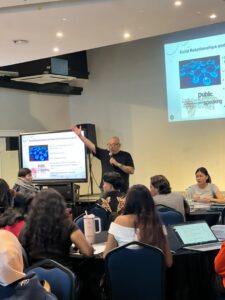
That was the moment the second session of BAC’s Global Graduate Learning (GGL) programme really came alive.
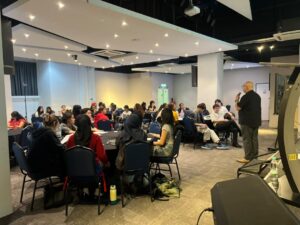
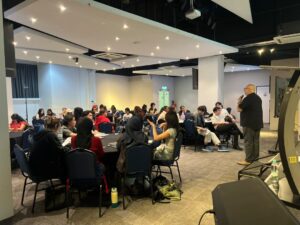
On 11 August 2026, the BAC Performing Arts Centre traded its usual stage lighting for round tables
and worksheets as a cohort of Foundation in Law students — most of them 17 to 19 years old — gathered for an afternoon that had nothing to do with exams. GGL exists to prepare students for the working world long before they graduate, bringing in a different professional each session to talk candidly about life after the lecture hall. Session one belonged to a digital marketer on personal branding. Session two belonged to a man with decades of it.
Mr Lawrence is the former head of IACT College, now a consultant with a long background in branding. He is also, it turns out, exactly the kind of speaker a room of teenagers pays attention to.
A room that never sat still
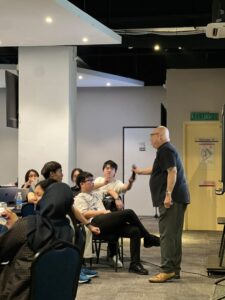
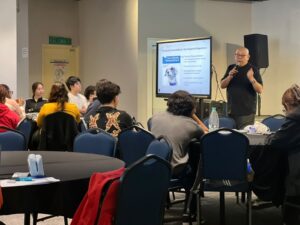
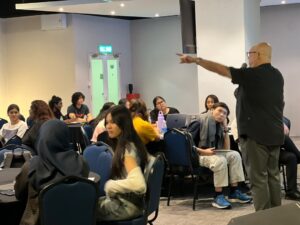
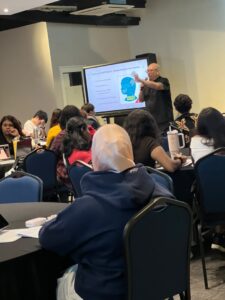
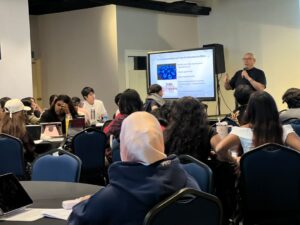
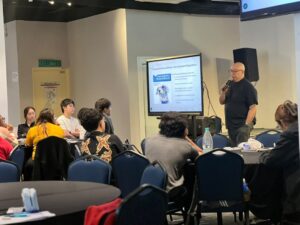
Dressed simply in black and rarely standing in one spot, Mr Lawrence spent the session moving between the screens and the student tables, punctuating career advice with broad gestures, quick humour and questions that sent hands shooting up across the room. He shared the microphone with students, pressed them for answers, and turned what could have been a dry talk on employability into something closer to a conversation. Serious lessons, lively delivery — the humour was the delivery system for advice the students might otherwise have tuned out.
And the advice was pointed. Qualifications matter, Mr Lawrence told them, but they are the
beginning, not the guarantee. A degree with good grades opens the door; what happens after you
walk through it depends on character, people skills, attitude, communication and a willingness to
keep learning.
Reputation is built in the classroom
One of his central messages was that a career does not begin at graduation — it begins now.
Reputation, he argued, is assembled quietly in every class attended, every deadline met, every
interaction with a peer or lecturer. A professional network, likewise, is not a contact list but a web of
trust: the people you can turn to for advice, the people you help in return, the people who might
one day refer work your way.
To make it concrete, he reached for a story. Early in his career at an advertising agency, an English
manager called a 10 a.m. meeting. When most department heads drifted in a few minutes late, the
manager simply ended it — and made the rule plain: 10 o’clock meant seated and ready at 10
o’clock, not strolling in after. At the next meeting, everyone was early. Punctuality, the students
learned, is not a small thing. It is a signal.
He was equally direct about the digital footprint. Employers can review a candidate’s public social media without ever mentioning it, and a technically qualified applicant may never learn that an ill judged post cost them the role. His challenge to the students: audit what your posts say about your character, keep your professional identity consistent, and start building a genuine LinkedIn presence now, one thoughtful contribution at a time.
Growth, curiosity and a 99-year-old on ChatGPT
With a session subtitled Preparing Tomorrow’s Lawyers for an AI-Powered World, the future of work was never far away — and Mr Lawrence’s answer to it was a growth mindset. Nurture curiosity, build resilience, accept feedback, embrace new technology, and treat learning as something that never finishes.
His proof that it never has to? His own mother, who lived to 99. Late in life, having heard about artificial intelligence, she downloaded ChatGPT and taught herself how to prompt it. If she could stay that curious, his point ran, no 18-year-old has any excuse.
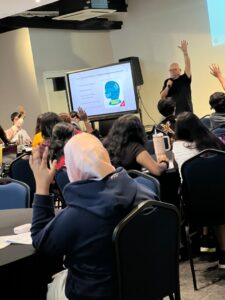
Curiosity, he stressed, is not a soft skill for a lawyer — it is the skill. He described a senior practitioner who interviews chambering applicants by showing them a video of a traffic accident and asking them to question the client. The candidates who stand out are not the ones who recite what everyone can see on screen, but the ones who ask the sharp follow-up question. Better questions reveal better facts, and better facts win cases.
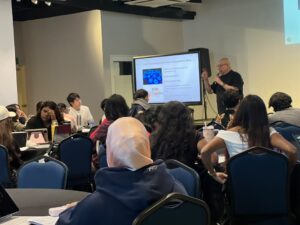
The afternoon closed on communication and relationships: develop public speaking through avenues like Toastmasters, master legal writing, learn to negotiate. When a student defined good negotiation as reaching an agreement that satisfies both sides, Mr Lawrence seized on it. The best negotiators, he said, leave their ego at the door — a win-win is far easier to reach when no one is trying to win outright.
The takeaway
By the end, the message was unmistakable, and it is one BAC built the GGL programme to deliver:
the degree gets you in the room, but character, curiosity and the way you treat people decide what
happens next. For a cohort still two years or more from their first day of practice, it was a valuable
head start — and a reminder that the work of becoming a professional starts today, not on
graduation day.
The Global Graduate Learning series continues with more speakers from across the professional
world. Watch this space for what Session 3 brings.
More for You
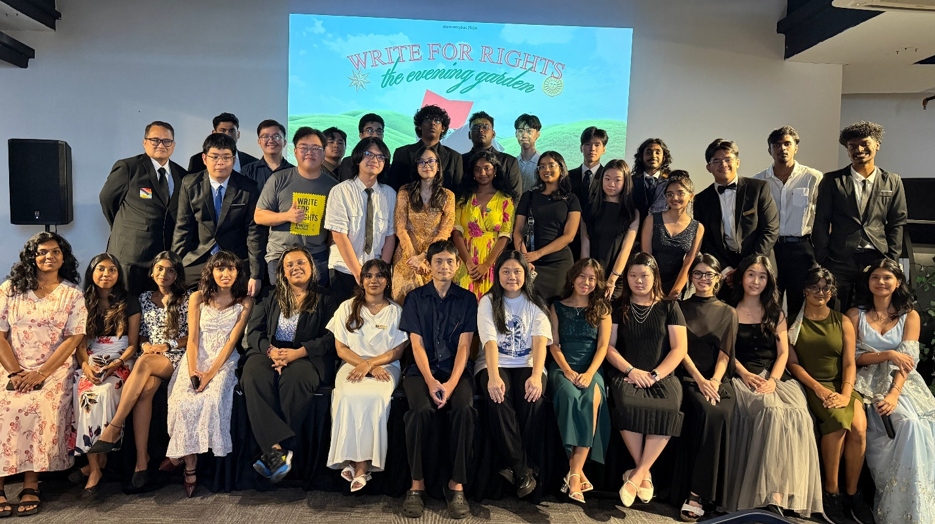
Write for Rights 2026: Advocating Justice Together
ULaw Open Day at BAC: Mastering Advocacy and the BPC Journey
An exclusive visit to Rahmat, Lim & Partners
Courtroom Tales of Ethics, Advocacy, & Domestic Violence with The Hon. Professor...