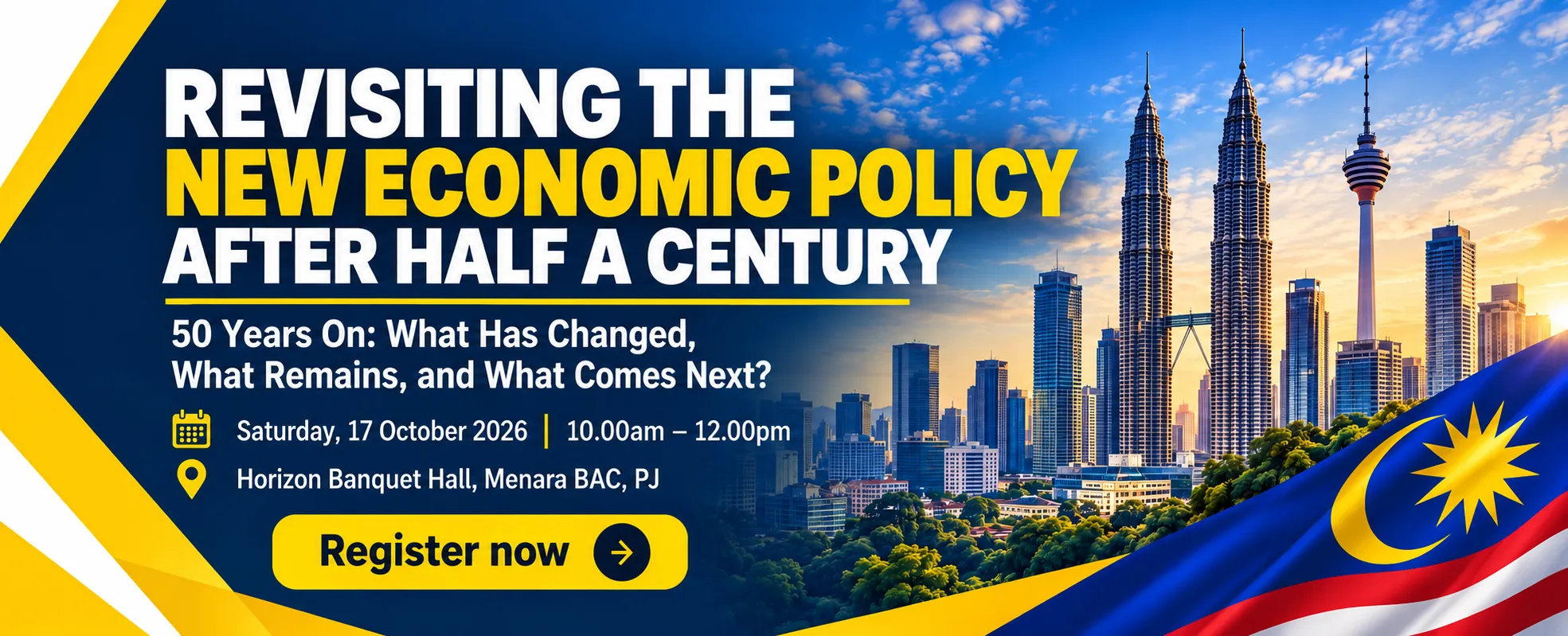

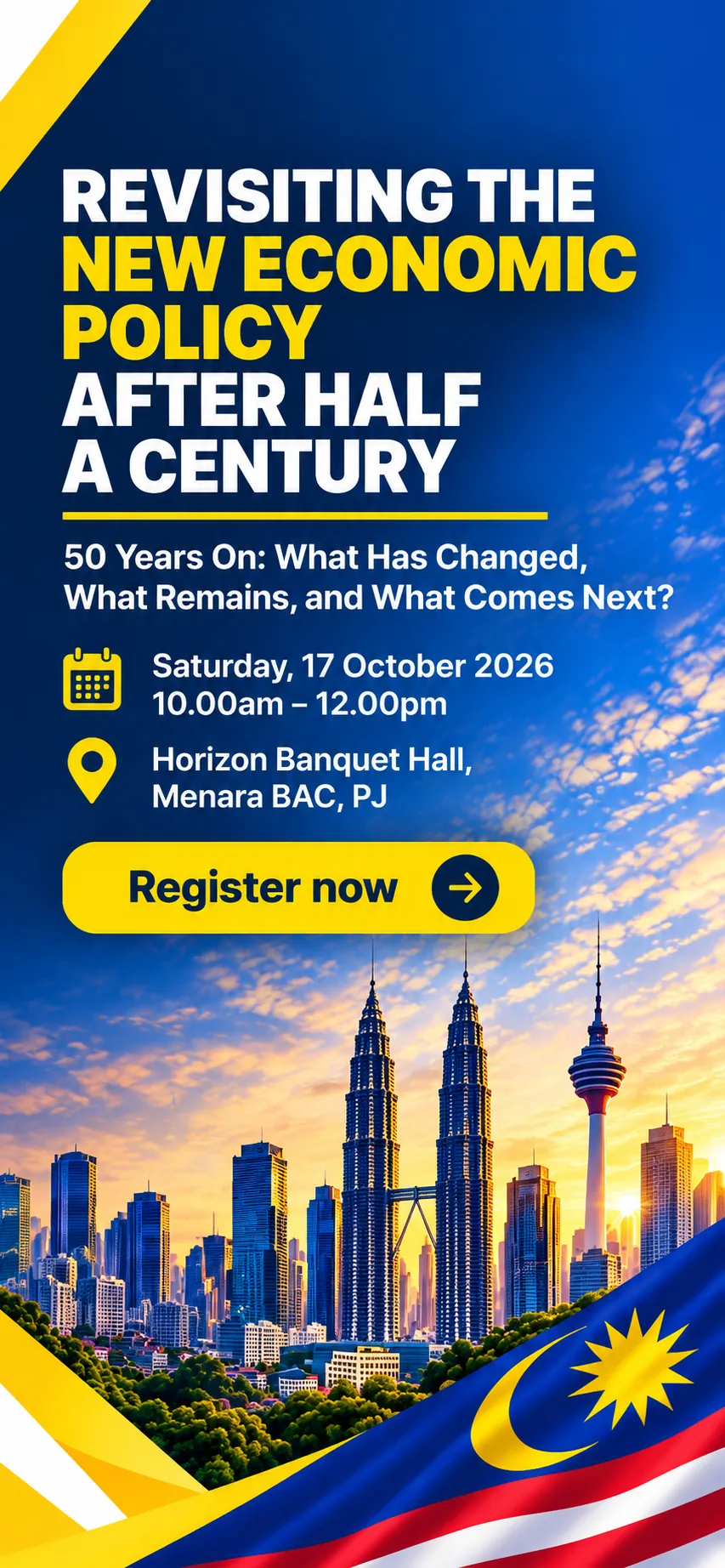
Revisiting the New Economic Policy After Half a Century brings together distinguished economists, academics and public intellectuals for a thoughtful examination of the NEP - its origins, objectives, implementation, evolution and impact - and the lessons that may inform Malaysia's next chapter.
This is not simply a conversation about the past.
It is a conversation about where Malaysia goes from here.
Register NowThe Conversation
What has changed? What remains? And what should Malaysia learn from the last 50 years? Join us for an engaging dialogue examining some of the most consequential questions surrounding Malaysia's economic and social development.
The session will explore:
- Five decades of implementation and outcomes What were the original objectives of the NEP, how did implementation evolve, and what have been its major outcomes?
- A Malaysia transformed How have economic growth, urbanisation, education, demographics and globalisation changed the environment in which public policy operates?
- Inclusion, equity and opportunity How should Malaysia understand socio-economic inequality and access to opportunity today?
- Lessons from experience What has worked, what challenges remain, and what can be learned from more than five decades of policy implementation?
- Malaysia's next chapter What principles and considerations should shape future approaches to economic development, social mobility and shared prosperity?
Expect a substantive discussion that brings together history, economics, policy and lived experience - with perspectives spanning generations.

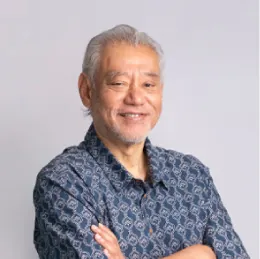
Professor Emeritus Dr
Jomo Kwame Sundaram
Research Advisor, Khazanah Research Institute
Visiting Fellow, Initiative for Policy Dialogue, Columbia University
Professor Emeritus Dr Jomo Kwame Sundaram is one of Malaysia's most prominent economists and public intellectuals.
He is currently Research Advisor at the Khazanah Research Institute and Visiting Fellow at the Initiative for Policy Dialogue at Columbia University. He is also a Fellow of the Academy of Sciences Malaysia and Professor Emeritus at Universiti Malaya.
His distinguished career has included serving as United Nations Assistant Secretary-General for Economic Development and Assistant Director-General of the Food and Agriculture Organization of the United Nations. He has authored and edited more than 100 books and has written extensively on economic development, inequality and public policy.
His honours include the 2007 Wassily Leontief Prize for Advancing the Frontiers of Economic Thought and the 2026 TWAS Award in Social Sciences.

Mohamed Tawfik bin Tun Dr Ismail
head the Task Force to establish Malaysia's first private television network in 1983
Mohamed Tawfik bin Tun Dr Ismail brings experience spanning public service, business, broadcasting and scholarship.
A former Member of Parliament, he has also worked in the corporate sector and was involved in the task force that preceded the establishment of Malaysia's first private television network, TV3. He studied at the University of New England and the University of Oxford.
He has contributed to scholarship on Malaysia's political history and co-edited works including Malaya's First Year at the United Nations and Drifting into Politics: The Unfinished Memoirs of Tun Dr Ismail.
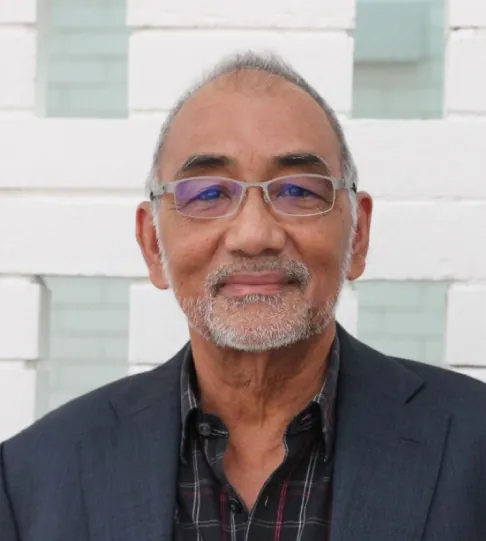
Professor Emeritus
Dr Johan Saravanamuttu
Professor Emeritus, Universiti Sains Malaysia
Adjunct Professor, Asia-Europe Institute, Universiti Malaya
Professor Emeritus Dr Johan Saravanamuttu is a respected scholar whose work spans Malaysian politics, foreign policy, elections, the middle class, political Islam and the New Economic Policy.
He has served as Professor Emeritus at Universiti Sains Malaysia, Adjunct Professor at the Asia-Europe Institute, Universiti Malaya, and has held research appointments including at the Institute of Southeast Asian Studies in Singapore.
His publications include The New Economic Policy in Malaysia: Affirmative Action, Ethnic Inequalities and Social Justice , which he co-edited, alongside numerous works examining Malaysian politics and society.
Who Is This For?
This dialogue is for anyone who wants to better understand how Malaysia
arrived at where it is today - and the choices, challenges and opportunities
that may shape its future.
It will be particularly relevant to:

Students and
young Malaysians
seeking greater context on the policies and decisions that have shaped the country they will inherit

Business leaders,
entrepreneurs and
professionals
interested in how economic and social policy influences opportunity, talent, investment and growth.

Academics,
researchers
and educators
working across economics, public policy, history, politics and social development.

Policymakers and
public-sector
professionals
interested in the lessons emerging from more than five decades of implementation.

Civil society
and community
leaders
engaged with issues of inequality, inclusion, social mobility and opportunity.

Anyone interested
in Malaysia's past,
present and future
who wants to hear informed perspectives and engage with one of the country's most important long-running policy conversations.

Why Attend?
Malaysia's economic story cannot be understood without understanding the NEP.
This session offers an opportunity to go beyond headlines and simplified narratives and hear informed perspectives on the historical context, outcomes, complexities and continuing relevance of the NEP.
Come prepared to listen, question assumptions and engage with the complexities behind more than five decades of Malaysian economic and social transformation.
Different generations. Different perspectives. One important conversation about Malaysia's future.