BAC and LexisNexis Sign MOU to Shape an AI-Ready Generation of Lawyers
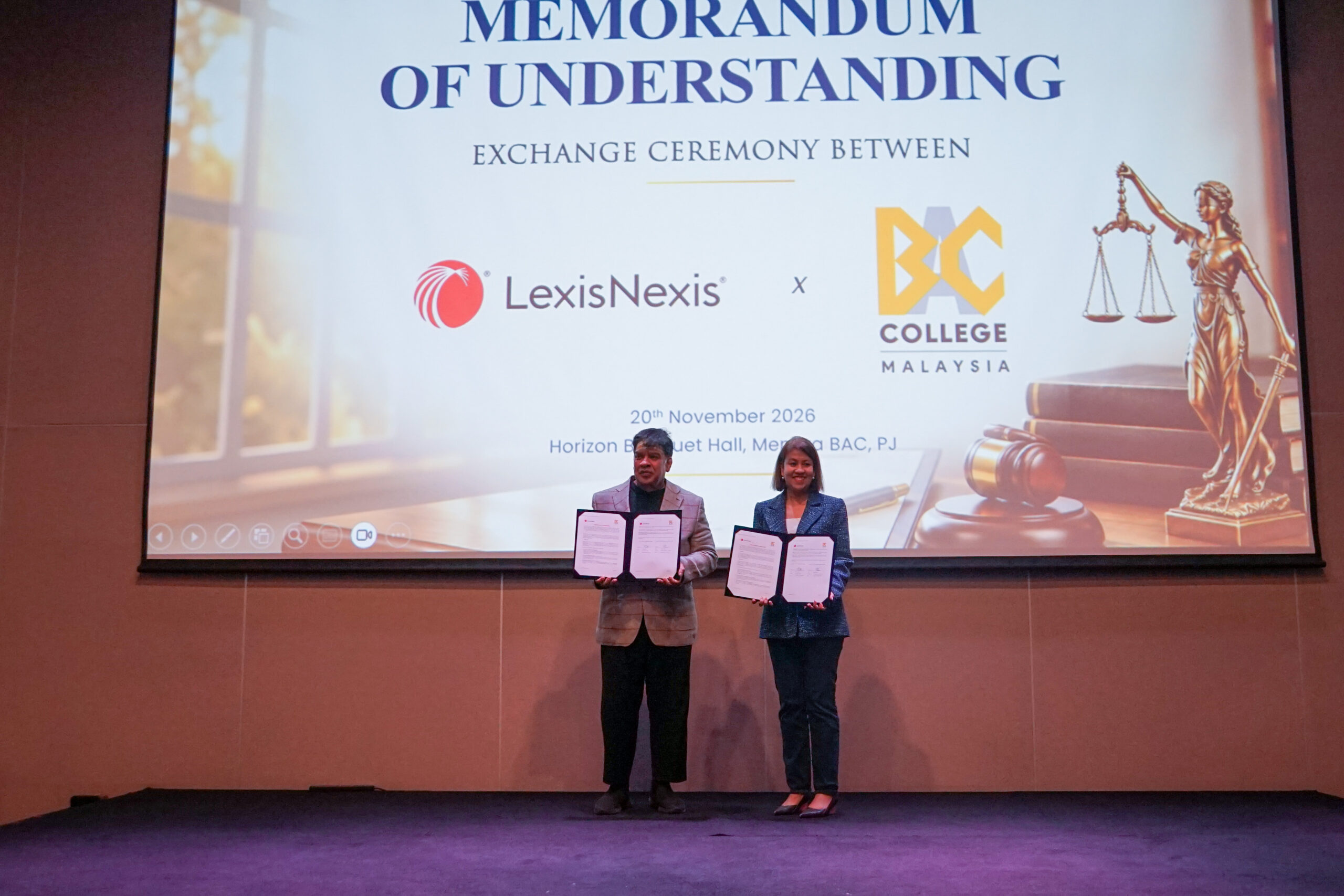
BAC Education and LexisNexis Southeast Asia have formalised a partnership to bring trusted legal AI into the law classroom, as BAC unveils a suite of AI-powered learning tools for its law students.
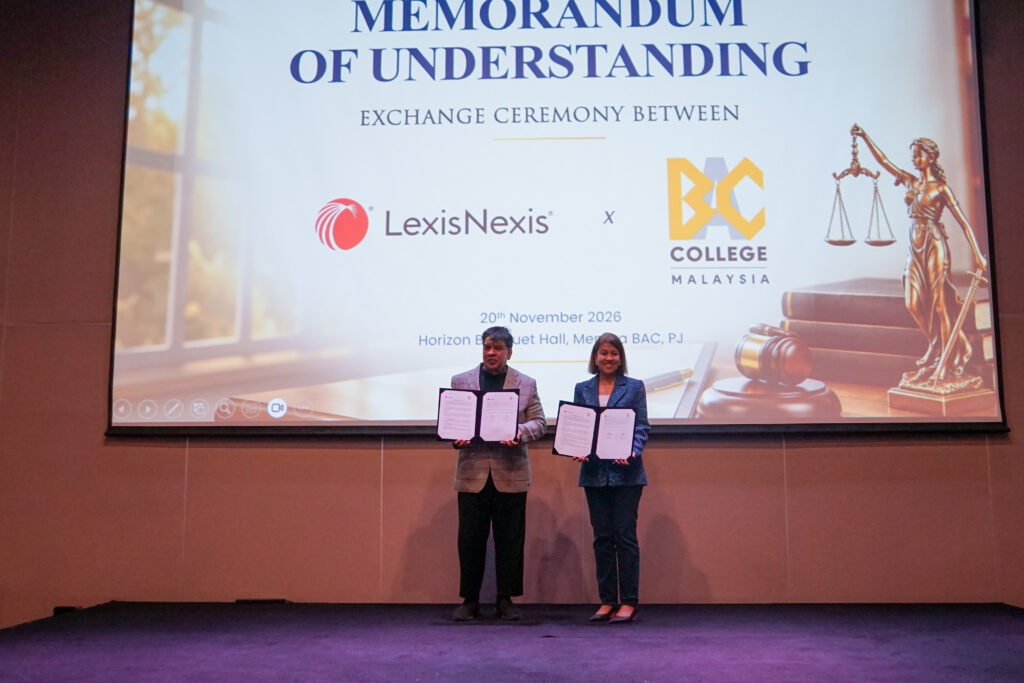
If the way law is practised is changing, the way it is taught must change too. That was the message at BAC’s MOU Exchange & Advancing AI in Legal Education event, where BAC and LexisNexis, the largest legal publisher in the region, exchanged a Memorandum of Understanding (MOU) in front of UK university partners, LexisNexis representatives, BAC management, law faculty and students.
The partnership brings together legal education, industry expertise and emerging technology. Alongside the signing, BAC presented the initiatives that bring its vision to life: LexisNexis Protégé, the BAC AI Tutor, the TrialSim advocacy platform and curated Coursera modules built into the law curriculum.
An AI-Native Law School
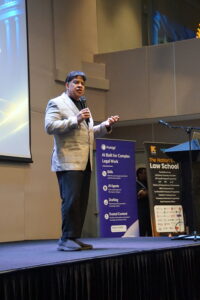
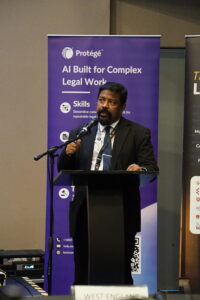
Raja Singham, Managing Director and Chief Future Officer of BAC Education, set out BAC’s ambition to become an AI-native law school in the region, where technology is built into how students learn, develop practical skills and prepare for their careers. Students will learn to use AI for research, drafting and everything in between, while still mastering the traditional methods. They will be assessed both ways: without AI and with it.
His reasoning was practical. In today’s law firms, no one asks whether a junior used AI. They ask what was found, whether it was verified, whether the lawyer agrees with it and what the lawyer’s own judgement is. Pretending AI does not exist, he said, would do students an injustice.
He argued that legally trained people have a natural advantage. Building apps or designs was once the preserve of engineers, but prompting is purely language, and language is a lawyer’s core strength. The clearer you can picture and communicate what you want, the better the result.
He also urged students to see law as more than a single-outcome degree. Careers in sustainability, data protection and cybersecurity all draw on legal training, and graduates should expect to switch roles and keep learning throughout their working lives. As AI grows stronger, he added, human qualities matter more: critical thinking, empathy, a moral compass and sound judgement.
At the heart of BAC’s approach is the T-shaped professional. The vertical bar is deep legal expertise. The horizontal bar is breadth: commercial awareness, fluency in technology and AI, negotiation, communication and human values. “The world doesn’t exist in silos,” he noted, and neither should a law degree.
He described LexisNexis, publisher of the Malayan Law Journal, as an integral part of BAC’s toolkit, and said that, as he understood it, this is the first partnership of its kind for LexisNexis in Southeast Asia.
LexisNexis: Preparing Lawyers For a World of Information
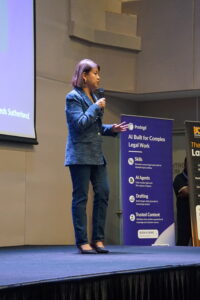
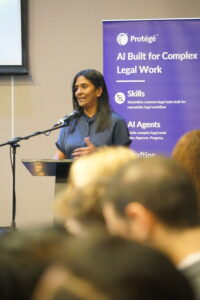
Following the MOU exchange, Gaythri Raman, Managing Director of LexisNexis Southeast Asia and India, spoke of a special relationship with BAC: many of her own team members are BAC graduates. The partnership, she said, is about preparing law students not just for today’s profession, but for a world where information is everywhere and overwhelming.
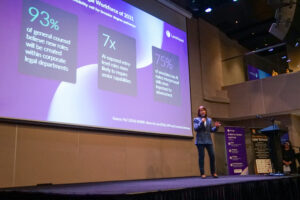
She pointed to a survey in which 93% of general counsel believe new legal roles will be created. Clients are becoming more involved, and practitioners must use AI to understand its risks and protect their clients. For students, that is good news: less drudgery and more strategic work. Interpersonal skills, commercial savvy and stakeholder management will matter more than ever.
LexisNexis practises what it preaches. It requires AI fluency of every new hire, tested before they join, and assesses its leaders on their ability to lead teams that use AI. Tomorrow’s lawyers, she said, will need to understand pricing, legal operations, legal data and data science, and law schools must offer short courses so that students and faculty keep pace with the technology.
Under the MOU, the two organisations will work on two initiatives:
- For educators: understanding AI, its responsible use and what efficiency gains mean, so that lecturers can help students articulate these skills in the workplace.
- For students: AI-assisted research and drafting, effective prompting, validating AI output, legal reasoning, risk and the future practice skills a world that expects AI will demand.
She expressed full confidence that the partnership will set the path for other law colleges, with BAC the first to state that intention.
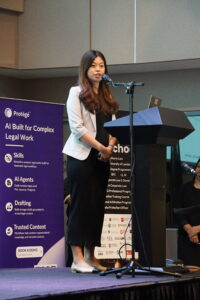
Protégé in Practice: A Junior Lawyer’s First Week
Amanda Poon, Business Development Manager at LexisNexis and BAC alumna, brought the technology to life with a live demonstration of LexisNexis Protégé, the company’s AI legal assistant. Her scenario was familiar to anyone who has started in practice: a client is owed RM80,000 for office furniture, the customer refuses to pay on the grounds that some items were defective, and the partner asks whether to apply for summary judgment.
Rather than simply defining summary judgment, Protégé helped her think through the litigation strategy. It identified the legal requirements under Order 14 of the Rules of Court 2012, the likely obstacles and how the law applied to the facts, with authorities she could check.
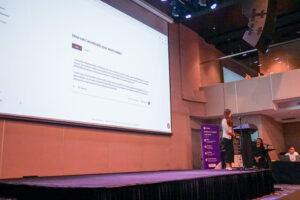
She then uploaded three pleadings. Protégé set out the plaintiff’s and defendant’s positions side by side, with paragraph references back to the originals. It surfaced a crucial detail: the defendant was disputing only some of the furniture, not all of it, which bears directly on whether the full claim is genuinely in dispute. Finally, it identified the strongest arguments, the risks and the evidence to obtain before advising the partner.
Her message to students was clear. AI means less time organising information and more time doing what lawyers are trained to do: analyse, strategise and advise.

The BAC AI Tutor: Personalised Learning, 24/7
Every student learns differently. Some grasp concepts quickly, while others need more time, guidance or a different approach. To support them, Tengku Firhad Bustaman Bin Tengku Mohd Ali, Senior Manager (Creative and Customer Experience) at BAC Learn, introduced BAC’s AI Tutor. Built into the learning management system (LMS), it is available to students around the clock and complements the role of lecturers.
The tutor offers three modes:
- Learn: explains concepts step by step, from an overview to detailed examples.
- Practise: tests understanding through questions and answers or multiple-choice quizzes.
- Assess: reviews work a student uploads and points out weaknesses and gaps.
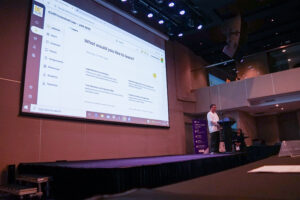
Strong guardrails keep it focused. Answers are drawn from the materials lecturers have uploaded for that subject, and a question about another subject is redirected to that subject’s page. Crucially, the AI Tutor will not write assignments or exams for students; it evaluates and coaches. It also tracks each student’s progress, while lecturers can use it to build lesson plans and structure assessments.
His message to students was clear. AI means less time organising information and more time doing what lawyers are trained to do: analyse, strategise and advise.
TrialSim: Building Advocacy Confidence Before the Courtroom
Reading law is one thing, applying it is another. Sharon Amen, a Senior Lecturer who began her teaching career in 1992 and currently teaches Land Law and Contract Law, introduced TrialSim, an AI-powered advocacy training platform with realistic, interactive courtroom simulations.
Advocacy is learned through practice, but regular coaching is hard to fit around classes and exams, and formal sessions can intimidate naturally shy students. TrialSim lets students practise privately, at their own pace and as often as they like, across openings, direct and cross-examination, closings, objections and appellate arguments.
Key features include:
- AI judges who question arguments and test reasoning in real time, with the bench set to cold, lukewarm or hot to control how often they interrupt.
- Competition space, where moot teams upload their actual competition materials and rehearse their own case rather than a generic one.
- Structured feedback after every session on strengths and areas to improve, with progress tracked session by session.
TrialSim was created by an American lawyer and is based mainly on the US legal system. BAC is working closely with its developers to incorporate local court procedures and materials. As Sharon stressed, it complements lectures, coaching and moots rather than replacing them; its purpose is to get students started and show them that confidence is built through preparation and practice.
AI in the Curriculum: Coursera and a New Kind of Tutorial
Andrew Kalish, Chief Legal Officer of BAC Education, explained how AI-related learning is being woven into the law curriculum, in line with BAC’s commitment to securing careers as well as delivering quality education.
BAC has integrated curated Coursera modules into the programme. In Year 1, Semester 1, these sit alongside core subjects and include a four-week course on AI governance, ethics and regulation. In Semester 2, students take a Legal Skills Passport of six modules, from how law connects with other disciplines to using evidence and preparation tools. Electives span intellectual property, commercial law, negotiation, arbitration and mediation, digital assets, governance, and privacy and data protection. Year 2 options, including AI for lawyers and AI governance, are being curated, some by BAC’s own faculty. Students earn a certificate for each module, strengthening their CVs while they study.
The most distinctive change is how tutorials work:
- Students prepare their own outline answer, with the relevant cases and authorities.
- In groups, they generate an outline using the LexisNexis AI tools.
- They compare the AI’s answer with their own and with other groups’, and verify every authority.
- They expose the errors, explaining what the AI got wrong, what it missed and why.
One exercise deliberately presents flawed AI advice on a negligence problem for students to dismantle, teaching them to spot risks such as invented authorities. AI is used in tutorials only, not in final examinations, and lecturers retain responsibility for learning outcomes and assessment rubrics.
The aim, he said, is to preserve the essential skills of drafting, research and analysis that practitioners worry AI could erode. At the end of the day, the lawyer signs the opinion, so their own skills must stand up. Using AI well is a skill and a competency every graduate should have.
A journey taken together
The future of legal education is not simply about teaching students to use AI. It is about preparing them to thrive in a world where AI is part of how law is practised, and that is a journey no institution can take alone. BAC thanked LexisNexis, its UK university partners, lecturers and students for their part in shaping what legal education can become.
In closing, Raja Singham reassured students that the UK degree programme and its tutorial methods remain unchanged. The new modules sit outside the UK degree structure, while BAC will draw on HRD Academy’s experience in training practising lawyers to enrich the Legal Skills Passport.
More for You
BAC and LexisNexis Sign MOU to Shape an AI-Ready Generation of Lawyers

From Trading Desks to Digital Assets: Adjunct Professor Teong Hng on AI,...

From Law to Cyber Strategy: Adjunct Professor Murugason R. Thangaratnam on AI,...
More Than Meets the Eye – BAC Leo and White Cane Day...