10 Mindset Changes That Help Lawyers Earn More With Less Time and Effort


Most lawyers are trained to believe that success comes from effort, precision and endurance. Those qualities matter, but they do not explain why some lawyers earn significantly more while working fewer hours.
The difference rarely lies in competency or technical skill, but in how a lawyer thinks about value, responsibility and their role in the client’s world.
The following are five mindset changes that determine whether a legal career compounds over time or slowly exhausts the person living it.
These are not productivity techniques, but ways of thinking that influence what kind of work a lawyer attracts, how clients perceive them and how income grows without requiring proportional increases in time and effort.
Mindset Change No.1: From Employee to Entrepreneur
Many lawyers, including senior lawyers, still operate mentally as employees even when they hold impressive titles. They focus on tasks, wait for instructions,s and measure success by approval or utilisation.
An entrepreneurial lawyer thinks beyond tasks and takes responsibility for outcomes, visibility and professional equity, regardless of whether they work inside a firm or independently.
This mindset encourages initiative, ownership and a longer-term view of career value rather than short-term compliance.
Example:
Two associates are assigned similar commercial matters. One completes tasks exactly as instructed and waits for the next request. The other asks why the issue matters to the client, identifies a potential commercial risk not mentioned in the brief and flags it early.
Within a year, the second lawyer is trusted with direct client interaction and higher-value work, even though both began with similar technical ability.
Mindset Change No.2: From Perfection to Progress
Legal training emphasises accuracy and caution, which are essential in the right situations. However, applying the same standard everywhere slows learning, visibility and growth. Intelligent lawyers learn to distinguish between situations that demand perfection and those that benefit from movement and iteration.
Progress creates feedback and feedback accelerates development.
Example:
A technology company discovers that a senior employee may have breached data policies by moving sensitive files to a personal cloud account. The facts are incomplete and wrongful dismissal claims are common in the jurisdiction.
One lawyer advises waiting for a full forensic investigation before taking any action, a process expected to take eight weeks. During this time, the employee remains in their role, rumours spread and morale declines.
Another lawyer explains that the company can act proportionately now. They recommend suspending the employee with pay, restricting system access, issuing an investigation notice and setting a two-week timeline for findings, while carefully documenting each decision.
The first approach delivers certainty too late. The second stabilises the situation early, protects the company and preserves procedural fairness while facts are still being established.
The legal standard is the same. The outcome depends on acting responsibly before perfect certainty exists.
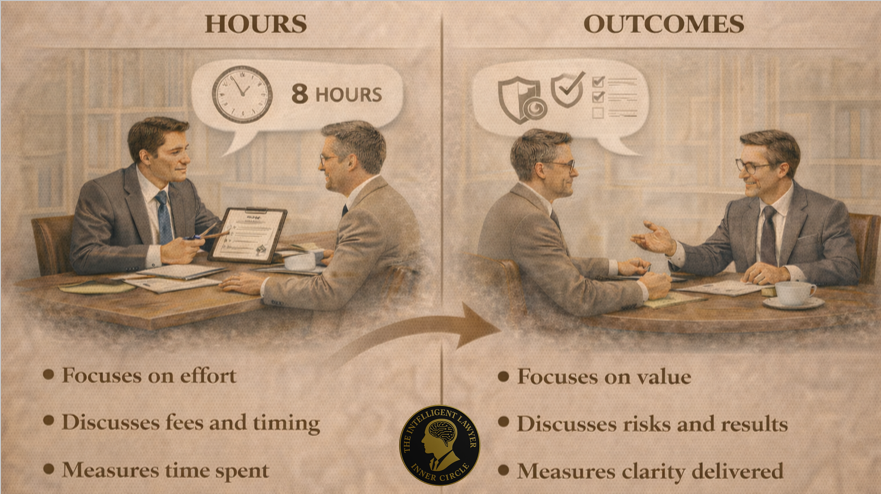
Mindset Change No.3: From Hours to Outcomes
Thinking in hours keeps the focus on effort. Thinking in outcomes aligns the lawyer with what the client actually values. Outcomes relate to clarity, risk reduction and decision-making confidence, not time spent.
This mindset changes how work is explained, scoped and perceived.
Example:
Instead of telling a client that a review will take eight hours, a lawyer explains that by the end of the week the client will know their real exposure, which risks matter and what actions are unnecessary. The client hears certainty and relief rather than cost and delay.
Mindset Change No.4: From Hours to Value
Time spent does not determine value delivered. Value depends on the importance of the problem being solved and the consequences avoided. Lawyers who understand this stop pursuing volume and start pursuing relevance.
This mindset naturally leads to higher-leverage work.
Example:
A company decides to end a long-term distribution relationship due to poor performance by the distributor.
One lawyer focuses on the contract. They analyse every termination clause, notice period and breach requirement.
Legally, the termination is defensible, but no thought is given to how the decision is presented to the distributor.
Another lawyer looks at the situation differently. They advise the company to:
- Deliver the termination in a private meeting rather than by a formal legal letter first
- Frame the decision as a commercial realignment rather than a fault-based failure
- Avoid accusatory language that could later be quoted in court
- Offer a short transition period or limited concessions to allow the distributor to exit with dignity
- Ensure internal staff are briefed not to make casual statements that imply misconduct
As a result, the distributor sees the termination as a commercial decision rather than an attack on their reputation or competence. They have little incentive to escalate, instruct lawyers or make allegations that could lead to litigation.
Note that he legal position did not change. What changed was the distributor’s motivation to fight.
By reducing hostility and perceived blame, the lawyer prevents the dispute from ever forming. That avoids months of correspondence, negotiations and potential litigation.
This is value over hours.
The lawyer spends less time, but removes the conditions that usually trigger expensive legal battles.
Mindset Change No.5: From More to Less
Busyness creates the illusion of productivity, but it often hides weak focus. Intelligent lawyers reduce the number of matters they handle and increase the significance of the work they keep.
Less work, chosen carefully, compounds more effectively than constant activity.
Example:
A mid-level commercial lawyer accepts every instruction that comes in. On any given week, they might handle a minor employment dispute, review a supplier contract, respond to a regulatory query and draft shareholder resolutions for different clients in unrelated industries.
Each task requires context switching, relearning background facts and managing different expectations. The lawyer works long hours but rarely feels in control.
Another lawyer makes a deliberate choice to focus almost exclusively on employment exit issues for technology companies with regional operations. They handle redundancies, negotiated exits, restraint clauses and related regulatory notifications. Because the issues repeat, the lawyer builds internal checklists, anticipates client concerns and knows where disputes usually arise.
Within a year, the second lawyer is completing matters faster, charging with more confidence and receiving repeat instructions without marketing effort. The first lawyer remains busy, reactive and dependent on constant inflow of new work.
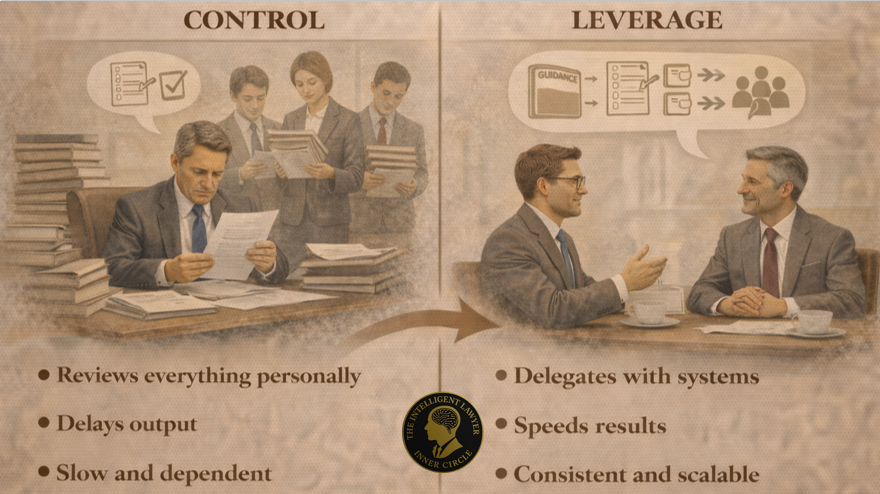
Mindset Change No.6: From Control to Leverage
Many lawyers equate quality with personal control. While this feels safe, it restricts growth and creates dependency on constant personal involvement. Leverage allows results without continuous supervision.
This mindset frees the lawyer to focus on judgement rather than execution.
Example:
A boutique firm owner insists on personally reviewing every contract, letter and court filing before anything leaves the firm. Junior lawyers prepare drafts, but nothing moves until the owner has checked formatting, wording and minor points. Turnaround times are slow, the owner works late every night and the firm cannot take on more work without risking burnout.
Another firm owner handles quality differently. They create standard review frameworks for common matters, set clear drafting principles and train juniors on what issues require escalation and what do not. Routine preparation is delegated, first-level reviews are handled by a senior associate and only judgment-heavy issues reach the owner’s desk.
As a result, documents move faster, juniors improve quickly and the owner spends time on strategy, client advice and final risk calls rather than line-by-line edits.
The firm takes on more matters, revenue grows and quality stays consistent because decisions are guided by systems rather than constant personal control.
Mindset Change No.7: From Transactions to Relationships
Transactional thinking treats legal work as isolated events. Relationship thinking recognises that trust and continuity create ongoing value for both lawyer and client.
Long-term relationships reduce marketing effort and stabilise income.
Example:
A lawyer is instructed to handle a commercial lease termination for a retail client who is a tenant. The matter is completed, the agreement is signed and the file is closed. The lawyer sends a final invoice and has no further contact with the client.
Another lawyer, handling a similar matter, follows up a month later to ask whether the handover went smoothly and whether any issues arose with the client's landlord. This lawyer also tells the client that the termination may affect his renewal rights in other locations owned by the same landlord, reminds the client of upcoming notice deadlines in existing leases and offers to review those timelines.
Six months later, when the client plans to restructure its retail footprint, the second lawyer is contacted first. The client does not request quotes or comparisons. They already trust the lawyer’s understanding of the business.
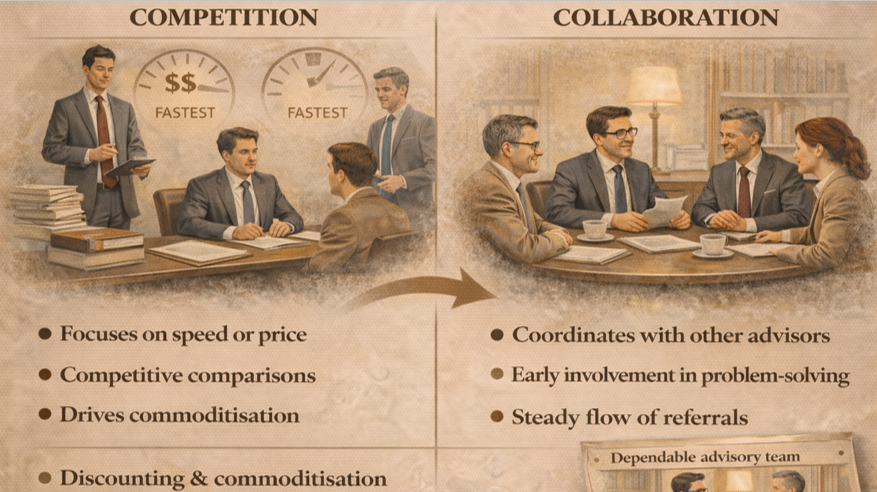
Mindset Change No.8: From Competition to Collaboration
When lawyers compete primarily on speed or price, they place themselves in a race that has no natural finish line. Someone will always be faster, cheaper or more willing to discount. This kind of competition pushes legal work toward commoditisation, where the lawyer is evaluated as a cost rather than a contributor to outcomes.
Collaboration changes that. By working alongside other professionals who serve the same clients, lawyers extend their relevance beyond a single task. They become part of how problems are identified early, framed correctly and resolved with fewer surprises. Collaboration also places the lawyer closer to decision-making, where value is higher and comparison shopping is less common.
This mindset positions the lawyer inside a trusted network rather than outside it. Work arrives through relationships rather than pitches. Fees are discussed in context rather than isolation. The lawyer is no longer one option among many, but part of a coordinated group that the client already relies on.
Example:
A lawyer advises growing private companies on shareholder and governance issues. Instead of competing with accountants and management consultants for the same clients, the lawyer builds working relationships with a small group of trusted accountants and corporate advisors who already advise those businesses.
When an accountant identifies a potential shareholder dispute, restructuring issue or director liability risk, the lawyer is brought in early. When the lawyer spots tax or financial reporting implications, the accountant is looped in before problems escalate. Each professional stays within their expertise, but the client experiences the advice as coordinated and coherent.
Over time, the lawyer receives a steady flow of referrals without pitching or discounting fees. Clients see the lawyer as part of a dependable advisory team rather than a standalone service. Pricing pressure drops because the lawyer is no longer compared on speed or cost, but valued for their role within a trusted circle.
Mindset Change No.9: From Chaos to Stability
Many lawyers build careers around unpredictable bursts of work. Matters arrive irregularly, income fluctuates from month to month and effort is spent constantly restarting rather than building forward. Even when work is abundant, the underlying instability creates stress, poor decisions and dependence on urgency.
Stability is about creating a professional foundation that does not rely on emergencies, chance referrals or constant firefighting. It means building repeatable work, ongoing client relationships and predictable income streams that reduce emotional and financial volatility. When stability exists, the lawyer gains space to think, plan and choose work deliberately rather than reacting to whatever appears next.
This mindset values continuity over intensity and sustainability over survival.
Example:
A solo practitioner builds their practice around ad-hoc conveyancing files, small disputes and one-off consultations. Some months are overwhelming with back-to-back matters. Other months are quiet with little income. Each new instruction requires fresh client onboarding, fresh context and fresh effort to win trust.
Another solo practitioner restructures their work around a narrow group of recurring clients, such as hotels and restaurant chains’ leases, licensing, employment and disputes across multiple outlets, where similar issues arise repeatedly. Even though individual matters still close, new cases arrive regularly because the relationship itself continues.
The first practitioner experiences constant swings between overload and uncertainty. The second experiences stability because the practice is built on continuity rather than isolated files.
Mindset Change No.10: From Endurance to Outcomes
Some lawyers unconsciously measure success by how much pressure they can withstand. Long hours, constant availability and personal sacrifice are treated as proof of commitment and professionalism. Over time, this turns endurance into a badge of honour, even though it quietly limits growth and damages judgement.
Outcomes focus on a different question. What continues to produce results even when the lawyer is not personally pushing at full intensity?
An outcome-driven lawyer designs work so that value is delivered through structure, continuity and systems rather than constant personal strain. Income becomes linked to effectiveness, not exhaustion.
This mindset recognises that a career built on endurance eventually breaks, while a career built on outcomes compounds. Sustainability becomes a professional advantage rather than a personal weakness.
Example:
One lawyer builds their reputation on being always available. They respond to messages late at night, personally handle every issue and step in whenever something becomes urgent. Clients appreciate the dedication, but the lawyer’s income depends entirely on their continued presence. When they take time off, work slows. When they are exhausted, mistakes increase.
Another lawyer designs their practice differently. They formalise ongoing relationships with a defined group of clients, clarify what support is included and set clear processes for handling recurring issues. Junior lawyers or support staff handle routine matters within agreed frameworks, while the lawyer focuses on higher-level judgement and client decisions. Even when the lawyer steps back temporarily, work continues and income remains stable.
Both lawyers work hard. But only one has built a practice that still functions when personal effort is reduced.
Why These Mindsets Matter
These ten mindset changes determine whether a lawyer’s career consumes them or supports them. They influence pricing, positioning, stress levels and long-term growth more than technical brilliance alone.
Remember:
Your legal skills can win you cases. But your mindset creates a lasting career.
When a lawyer changes how they think about ownership, value and outcomes, income increases without requiring more effort. Control improves without sacrificing professionalism. Progress becomes deliberate rather than accidental.
That is the foundation of becoming an Intelligent Lawyer.
Sen Ze is a lawyer, entrepreneur and best-selling author known for his work at the intersection of law, technology and entrepreneurship. With decades of experience spanning legal practice, business building and technology adoption, he focuses on how emerging technologies change risk, responsibility and professional decision-making.
He is the author of "The Intelligent Lawyer" book, which is a foundational text for practising lawyers to earn more without putting in extra time and effort or burning out. He is also the creator and presenter of the "AI & The Law" lecture series at BAC College, which examines how artificial intelligence generates new legal work for lawyers. His work is grounded in real-world legal consequences rather than theory, with a strong emphasis on judgement, accountability and governance.
As an entrepreneur and author, Sen Ze has helped thousands of professionals understand how technological advancements change careers, businesses and value creation. He is known for explaining complex ideas in clear, practical language and for preparing lawyers to move beyond routine work into higher-value advisory and strategic roles created by AI-driven uncertainty.
"The Intelligent Lawyer" can be purchased at https://bacstore.my/products/the-intelligent-lawyer.